ABA SOAP Notes Writer

ABA SOAP Notes Writer

ABA SOAP Notes Writer

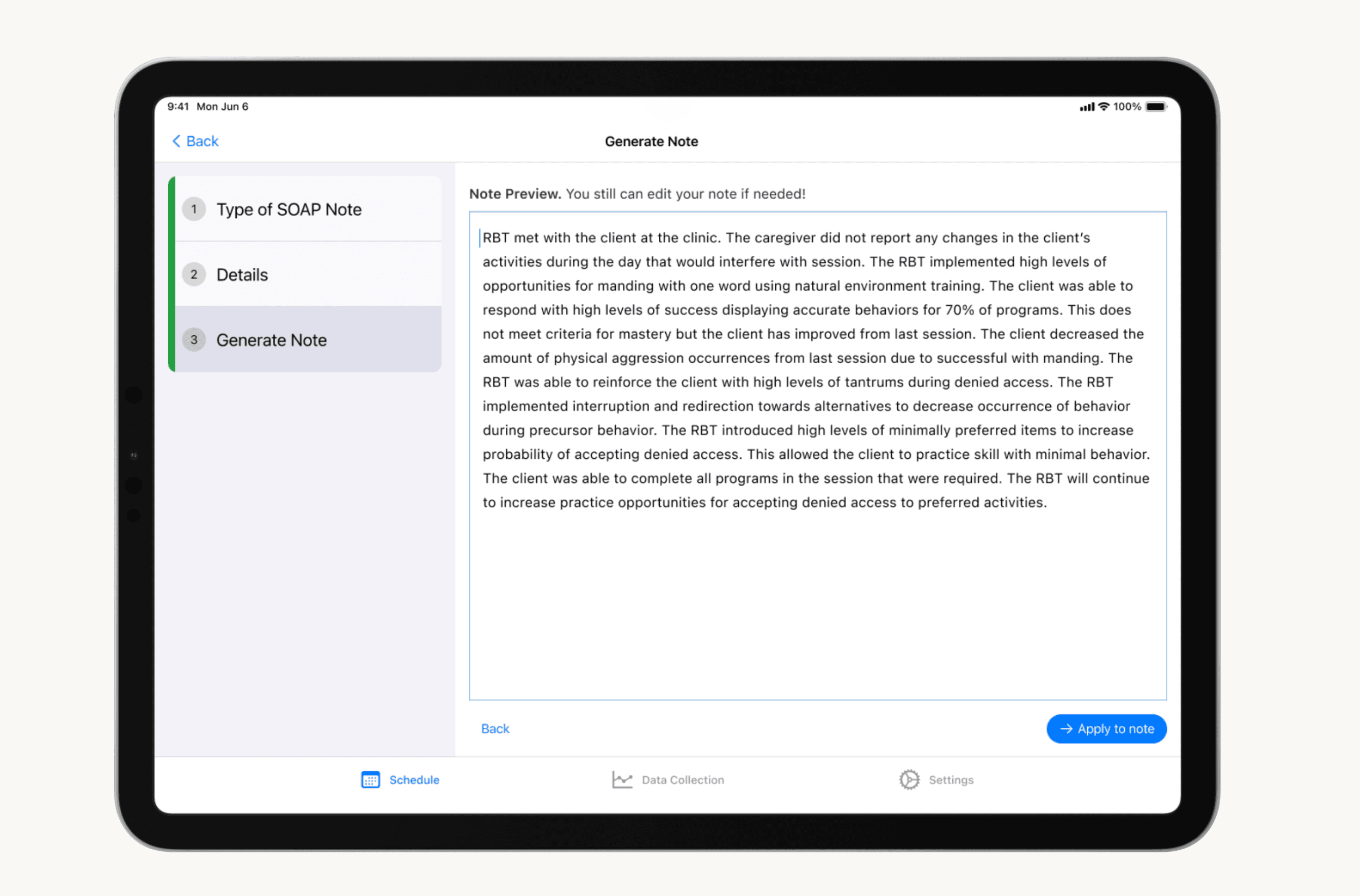
The SOAP Notes Writer project sought to transform the documentation process in Applied Behavior Analysis (ABA) therapy by introducing an AI-driven interface. Through extensive user research and iterative design, the project aimed to address the inefficiencies and challenges associated with traditional SOAP note documentation.


In collaboration with ABA therapists and adherence to industry standards, the project aimed to deliver a user-friendly and effective solution to revolutionize the documentation process in ABA therapy.
Location

Location

United States

United States

Industry

Industry

Health

Health

Users

Users

BCBAs

BCBAs

Challenge

Challenge

The SOAP Notes Writer project streamlines documentation processes for autism therapy, ensuring accuracy and efficiency.


By automating SOAP note generation, it minimizes errors and inconsistencies, crucial for timely insurance claims processing. This enhances clinical workflows, improves client outcomes, and safeguards the company's financial health by reducing claim rejections and delays.

Process

Process

  1. Research: the initial phase of the SOAP Notes Writer project involved extensive desk research to grasp the intricacies of current workflows surrounding SOAP Notes. This step was crucial as we sought to replace a process deeply ingrained in users' routines, requiring a comprehensive understanding of existing practices.


    Additionally, conducting interviews with individuals familiar with the reasons behind SOAP Note rejections by insurance providers proved paramount. These insights were instrumental in ensuring the project's success and efficiency by addressing underlying issues and streamlining the documentation process.

  1. Research: the initial phase of the SOAP Notes Writer project involved extensive desk research to grasp the intricacies of current workflows surrounding SOAP Notes. This step was crucial as we sought to replace a process deeply ingrained in users' routines, requiring a comprehensive understanding of existing practices.


    Additionally, conducting interviews with individuals familiar with the reasons behind SOAP Note rejections by insurance providers proved paramount. These insights were instrumental in ensuring the project's success and efficiency by addressing underlying issues and streamlining the documentation process.

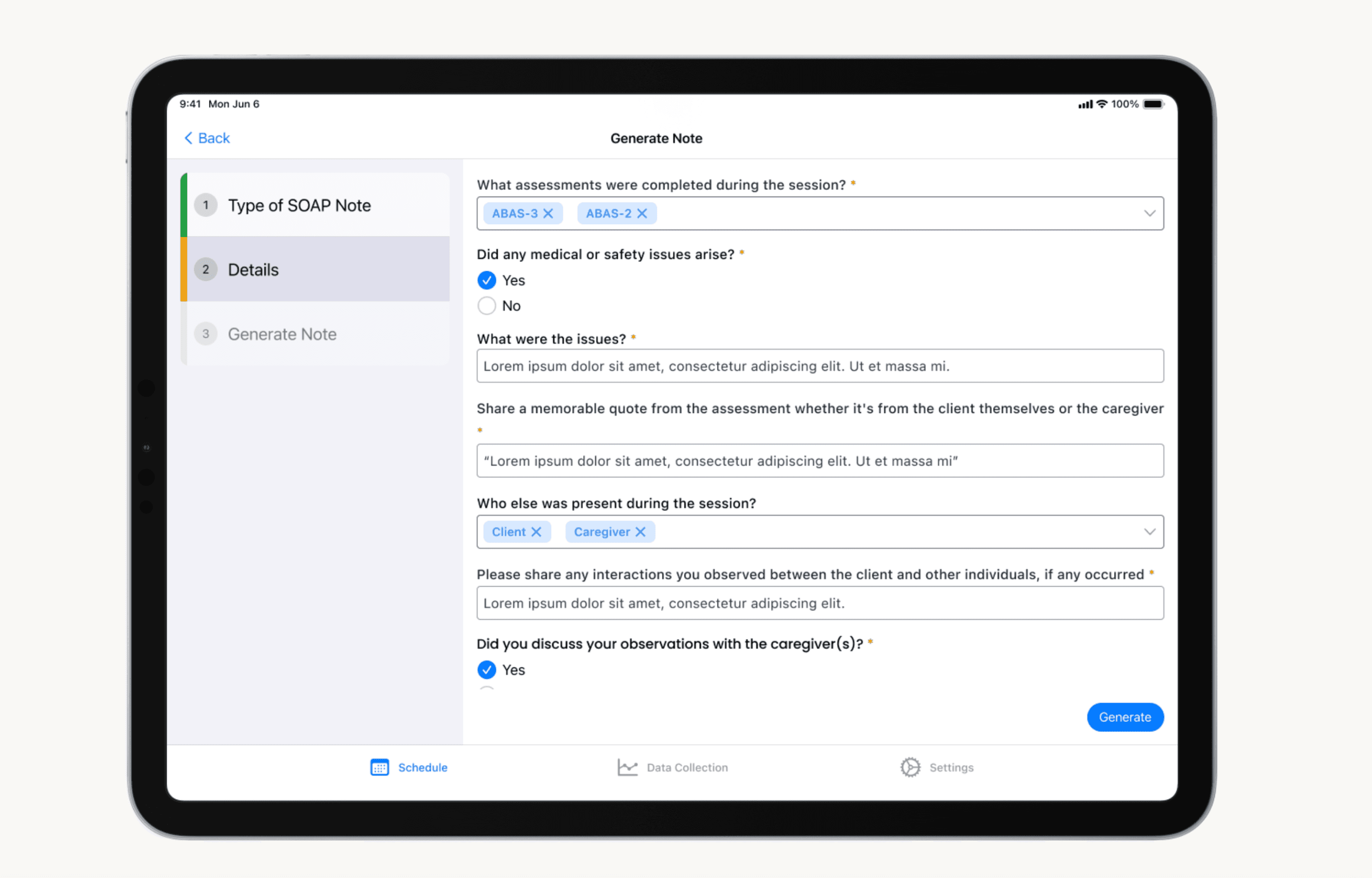
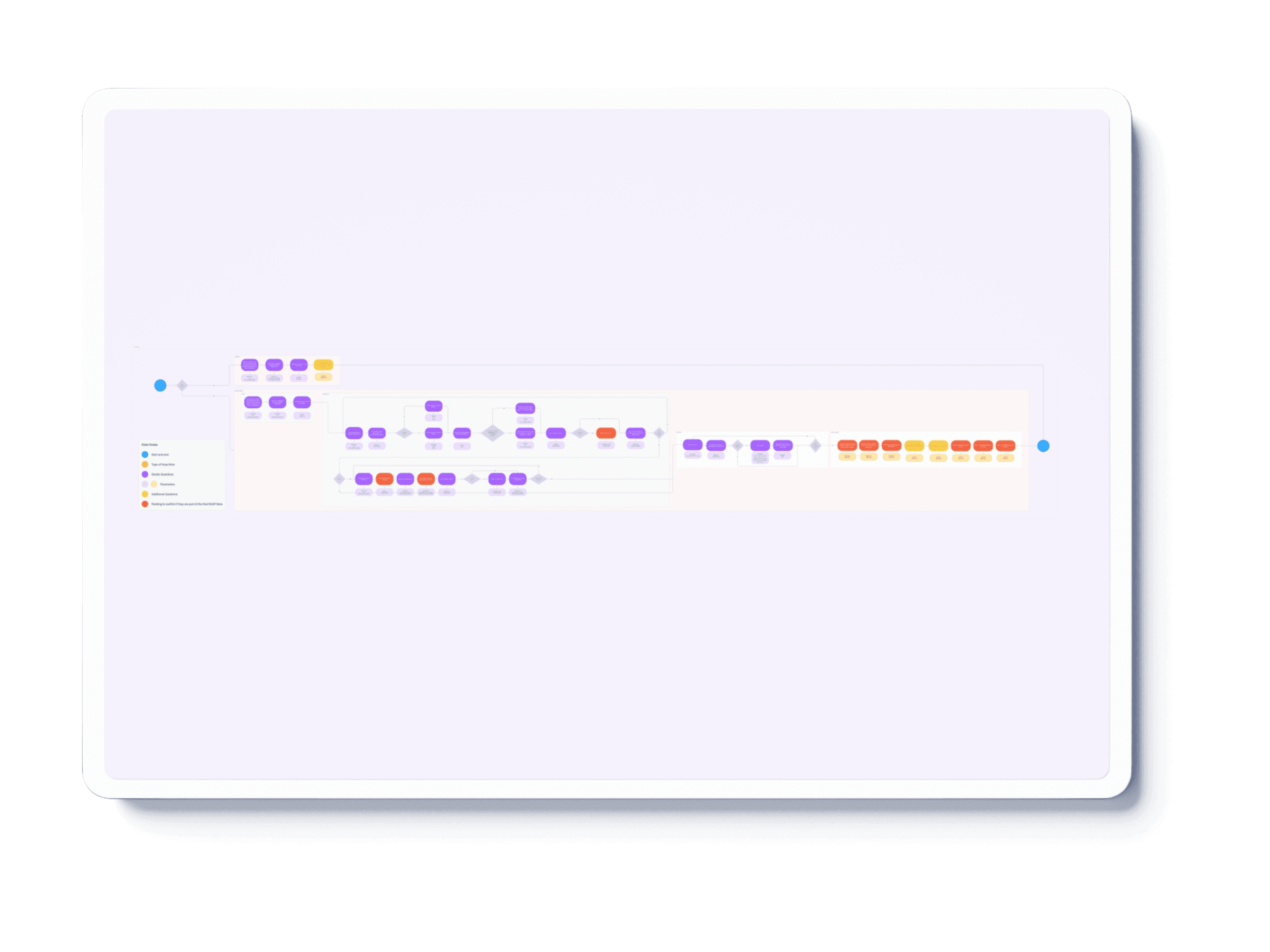
  1. User flow: the collected data and architectural information are thoroughly analyzed and classified. Based on this analysis, individualized user flows are meticulously crafted for each medical service. These user flows serve as the blueprint for guiding users through the SOAP Note generation process, ensuring clarity, efficiency, and compliance with industry standards for each specific medical procedure.
  1. Design & Iteration: we translated the user flows into tangible design elements through the creation of low, mid, and high fidelity wireframes. These wireframes serve as visual representations of the user interface and interaction design for the SOAP Note generation process.

  1. Design & Iteration: we translated the user flows into tangible design elements through the creation of low, mid, and high fidelity wireframes. These wireframes serve as visual representations of the user interface and interaction design for the SOAP Note generation process.

  1. User Tests: we conducted usability testing to evaluate the initial design approach of the Data Collection prototype among BCBAs and RBTs. The research aimed to assess the intuitiveness, understandability, and efficiency of the prototype while identifying potential enhancements. We employed cognitive walkthroughs and semi-structured qualitative interviews to gain insights into the user experience, preferences, and thoughts.

  1. User Tests: we conducted usability testing to evaluate the initial design approach of the Data Collection prototype among BCBAs and RBTs. The research aimed to assess the intuitiveness, understandability, and efficiency of the prototype while identifying potential enhancements. We employed cognitive walkthroughs and semi-structured qualitative interviews to gain insights into the user experience, preferences, and thoughts.

Results

Results

Time spent on note generation decreased by 50%, enhancing both efficiency and job satisfaction. This significant improvement not only streamlined daily workflows but also allowed healthcare professionals to dedicate more time to patient care. The reduction in administrative burden contributed to higher workplace morale, improved focus, and better overall outcomes. These advancements highlight the project's success in fostering a more productive and satisfying work environment.

Time spent on note generation decreased by 50%, enhancing both efficiency and job satisfaction. This significant improvement not only streamlined daily workflows but also allowed healthcare professionals to dedicate more time to patient care. The reduction in administrative burden contributed to higher workplace morale, improved focus, and better overall outcomes. These advancements highlight the project's success in fostering a more productive and satisfying work environment.

Valentina Lopera Marulanda © 2025

Valentina Lopera Marulanda © 2025